Tourism and Traditions of Faith
The story documents the narrative of the Ganga to understand the relationship between faith and tourism, and how these become contributors to pollution. While many rivers around the world are both revered and exploited, the Ganga is the fifth-most polluted river in the world. There is perhaps no better symbol than the Ganga to understand this complex and ambivalent connection between humanity and its rivers. The story is set in four locations along the Ganga River, in an attempt to understand why a river and a goddess are exploited in the name of religion as well as tourism. But why do we appropriate rivers for tourism and religion? Why is the river that is worshiped, neglected in the name of religion? This narrative delves into mythology and faith, to uncover underlying belief systems which shape our relationship with flowing water.

Rishikesh, Haridwar
Tackling Plastic Pollution in the Ganga River System
This narrative draws from insights collected during an all-women’s expedition working on tackling plastic pollution in the Ganga River. To determine the extent of pollution in the Ganga, a group of 12 women carried out five different methods at ten locations from Devprayag (upstream, near the source of the Ganga) to Kankhal (a village near Haridwar). The study commenced with on-site methods that included community-based interviews, collection of samples for water quality testing, and land-based methods which were conducted on-site, while parallelly documenting people’s associations with the Ganga. After the on-site techniques provided the scientific data, physiographic analysis and a narrative were used to determine the causes of the deteriorating condition of the river. The narrative documents five sites - Devprayag, Muni ki Reti, Triveni ghat in Rishikesh, and Hari-ki-Pauri, Kangri in Haridwar—that hold historical and mythological significance.
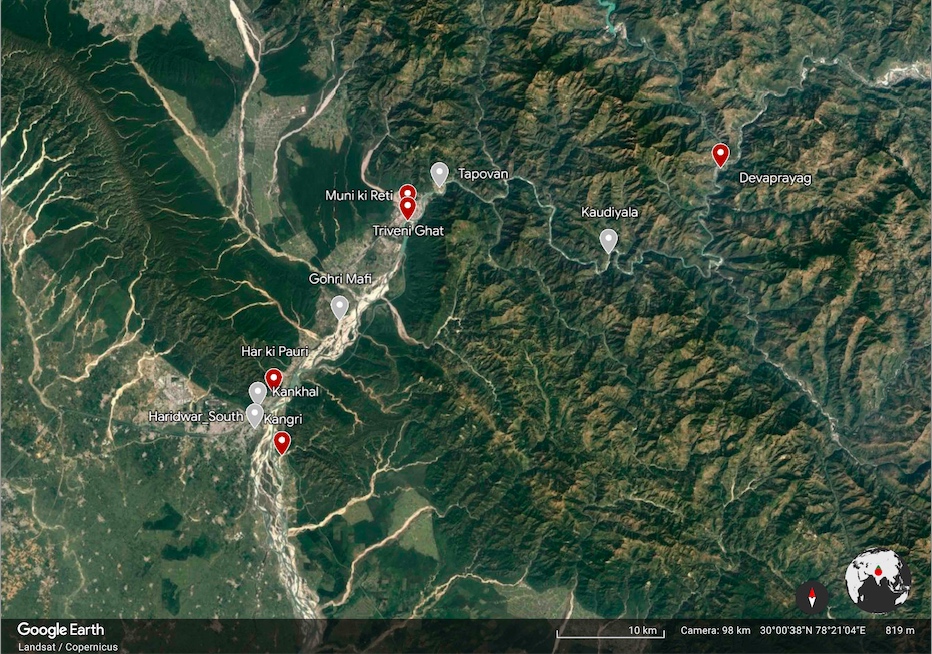
The five sites (marked red) are documented for narratives out of the ten sites (marked grey) studied at Rishikesh-Haridwar.
Source: Google Earth
River Ganga in Hindu Mythology
Home to a quarter of India’s population, the Ganga River has many names. Most commonly known as Ma Ganga to Indians and the Ganges to Westerners, it is more than just a river to Indians. For Hindus, the river is considered an extension of Lord Shiva. It is revered as a Hindu deity and is at the heart of Indian culture. While all rivers in Hindu mythology are revered as removers of pollution, the Ganga River is particularly considered to have purifying powers. According to its mention in the Bhagavad Gita, she (the Ganga river) is perceived as divine energy in nature, also called adi-shakti (Singh, 1996). The water of the Ganga is considered sacred and is an essential element in all Hindu rites. She is believed to have the power of salvation — in Sanskrit, referred to as Moksha (Kumar, 2017). It has a fascinating past and numerous mythological tales, but what endures is the reverence with which people still regard the river today, making it one of the most sacred rivers in the world.
Ganga as a Goddess
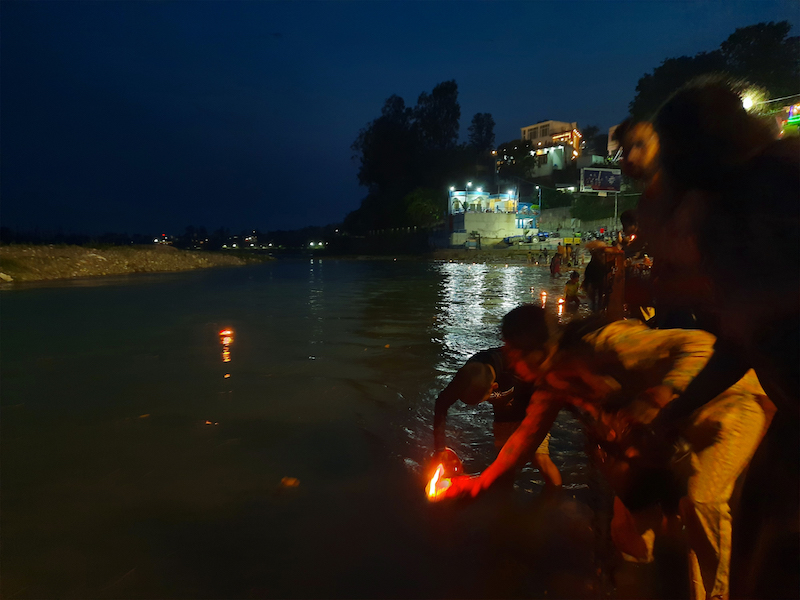
The Ganga River after the Ganga aarti (prayer) on the Triveni Ghat in Rishikesh.
Image: Moksha Mehta
Rituals of Salvation
Moksha (salvation) can be understood as the ultimate goal in Hinduism. It is the attainment of the ‘highest spiritual state’, the liberation of worldly desires, and the liberation from the cycle of life and death. Hindu rituals and beliefs, serve as guiding principles and pathways toward attaining Moksha, enabling individuals to transcend the limitations of existence.
It is believed that Moksha is achieved when the individual soul (in Sanskrit referred to as Atman) unites the “universal substrate and source of all existence” (in Sanskrit referred to as Brahman) (Basharat, n.d.) In Hinduism, the path of salvation can be achieved in three different ways, following the path of selfless deed (in Sanskrit referred to as Karma Yoga), the path of complete devotion to god (in Sanskrit referred to as Bhakti Yoga), and/or attaining true knowledge and wisdom (in Sanskrit referred to as Jnana Yoga) (Basharat, n.d.).
Pilgrims performing Bhakti Yoga
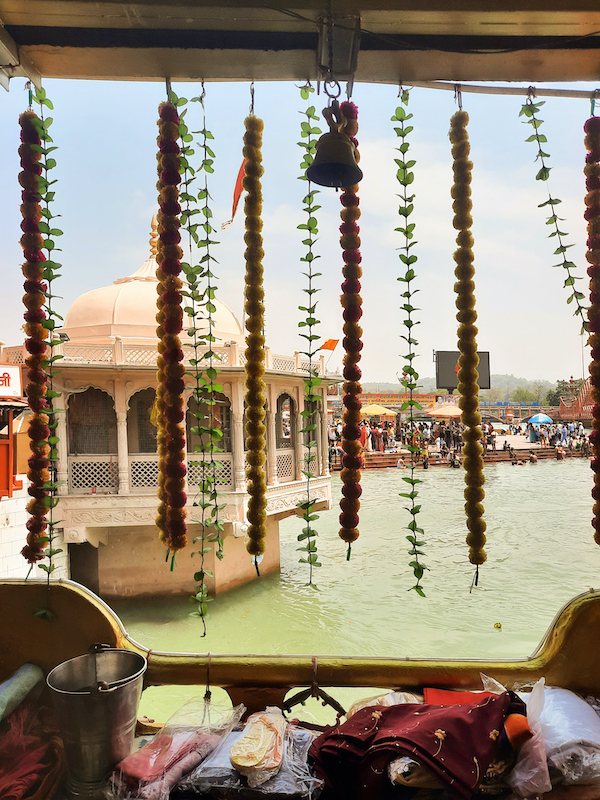
The ghats and temples along the Ganga as seen from the Shri Ganga Mandir (temple) at Har ki Pauri, Haridwar.
Image: Moksha Mehta
Salvation through Worship of the Ganga
While the concept of salvation has remained a constant in Hinduism, the methods to attain it have evolved over time. The practice of worshipping rivers, for example, can be traced back to the Epics and Puranas from around 250 A.D., such as the Mahabharata and the Ramayana. During this period, the focus on attaining salvation shifted towards the path of devotion, known as Bhakti Yoga. This path involved worshipping gods, idols, rivers, and mountains, and it was specifically developed to be accessible to the common people (Raj, 1994). During this time, individuals started praying to various deities, visiting sacred places, and engaging in ceremonies to purify their souls from their sins (Direction: Salvation According to Hinduism, n.d.). Ganga, also known as the river of salvation, holds a significant place in mythological beliefs. According to the legends, King Bhagirathi fervently prayed to Lord Vishnu to secure the salvation of his 60,000 ancestors who had been incinerated by Sage Kapila. Moved by Bhagirathi's devotion, Lord Vishnu granted his request. Ganga was directed to descend to Earth and wash over the ashes of the departed ancestors. However, to mitigate the potential devastation caused by the mighty river's descent, Ganga merged with Lord Shiva, who guided her to gently flow upon the Earth. This divine union ensured the river's controlled descent and allowed it to purify the souls of the departed.
Lord Shiva and the Ganga
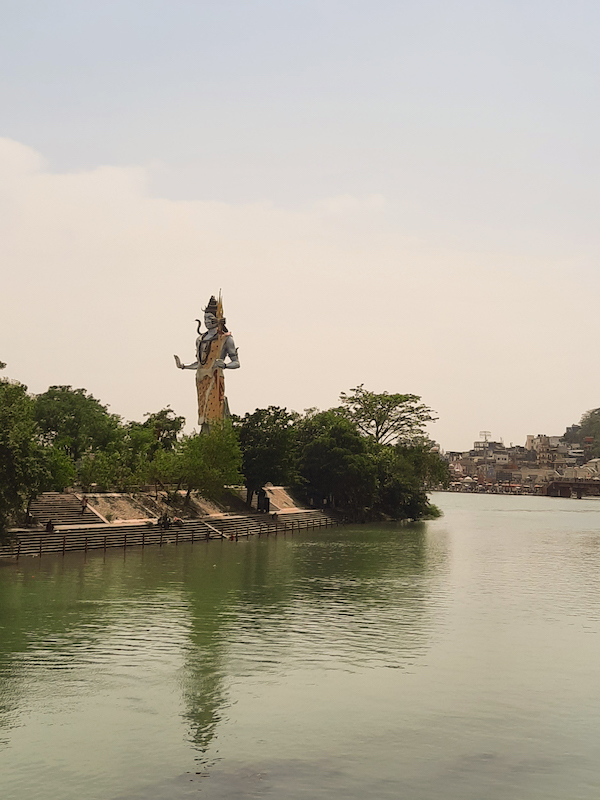
A large statue of Lord Shiva can be seen on the opposite bank of the Har ki Pauri Ghats.
Image: Moksha Mehta
Devprayag
The Ganga River originates from its source river, Bhagirathi, at the Gangotri glacier at a height of 13,970 feet in the Himalayan Mountains of north-eastern India. A source of food and livelihoods, it flows along a length of 1,560 miles (2,510 km), creating one of the most fertile valleys in the world.
The Bhagirathi River becomes the Ganges when it merges with the Alaknanda River at Devprayag. Devprayag is one of the five sites called Panch Prayag, where rivers conjugate with the Alaknanda river to take the form of the Ganga river. In the epic Ramayana, Lord Ram and his father, King Dashratha, performed penance here. This location is thought to have great significance; taking a dip here purifies the soul and brings devotees closer to Moksha.
The Point of Confluence
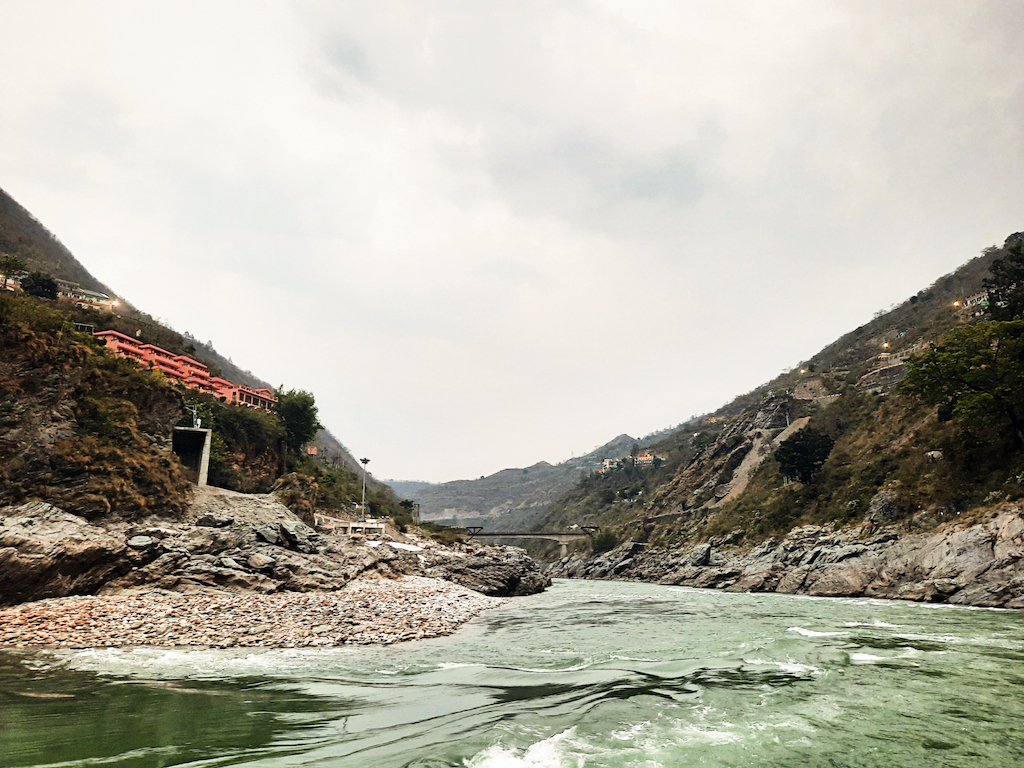
The confluence at Devprayag where the rivers Bhagirathi (left) and Alaknanda (right) merge to form the Ganga.
Image: Moksha Mehta
On the Path of Liberation and Salvation
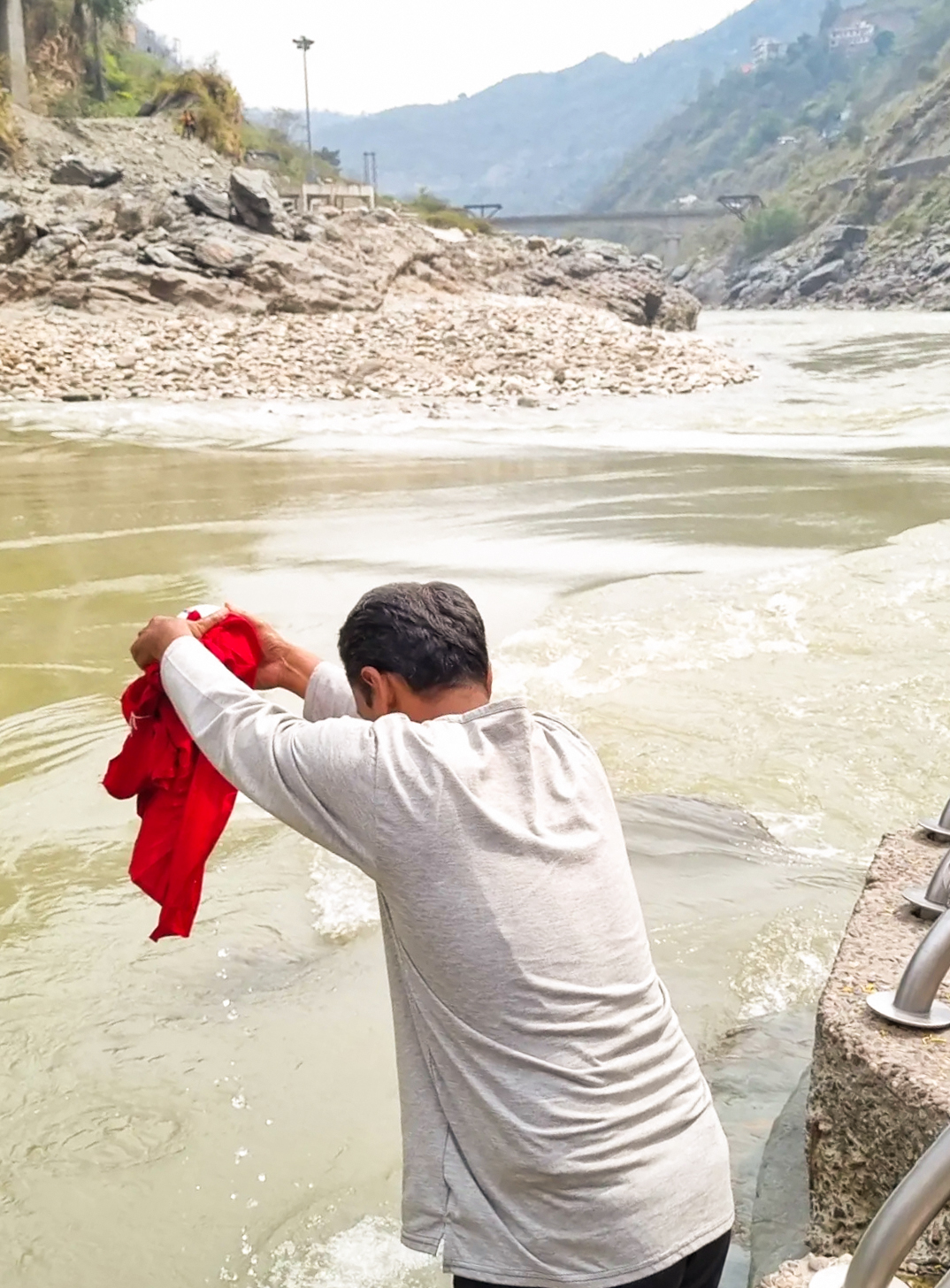
A person immersing the ashes of a loved one for them to attain Moksha (salvation).
Image: Mansee Bal Bhargava
Every day, thousands of pilgrims from all over India and the world come to immerse the ashes of their loved ones in the Ganga for their souls to attain Moksha.
Water collected at the Sangam (confluence) is believed to be more sacred than water collected at any other place along the Ganga. Pilgrims drink this water to cleanse their souls. They also carry the water to purify their homes and use them in other rituals.
Faith and Tourism: Sources of Livelihood
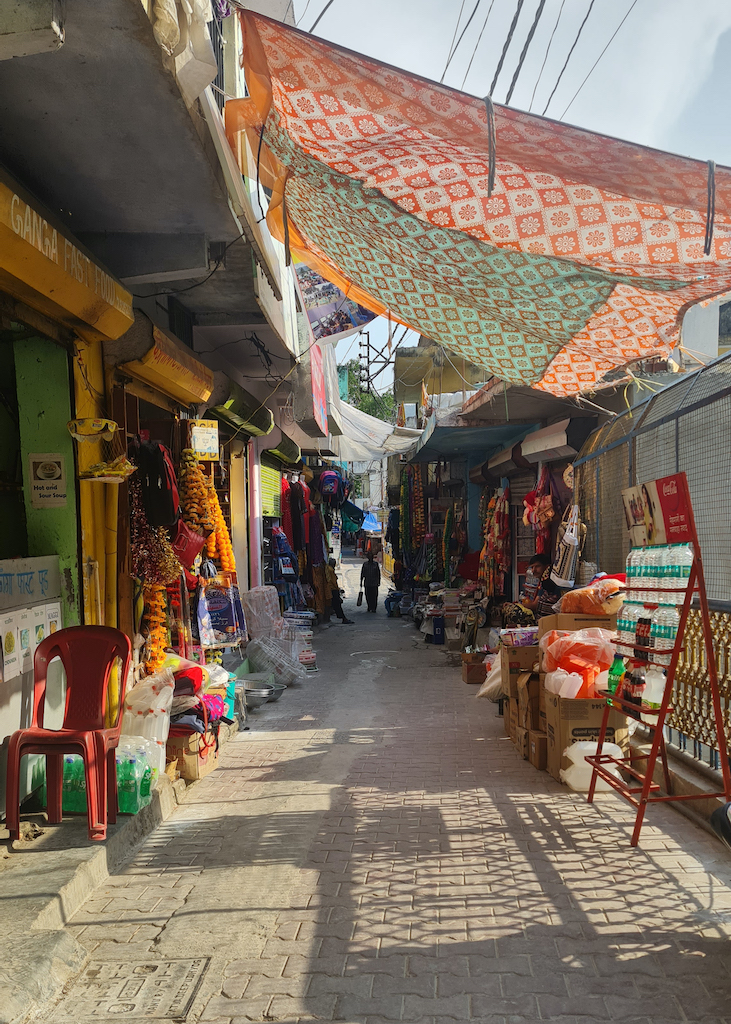
Shops line the ghats at Devprayag, selling ritual necessities like flowers, plastic containers to collected the river’s holy water, and even snacks for tourists and visitors.
Image: Monica Tewari
Settlements along the Water
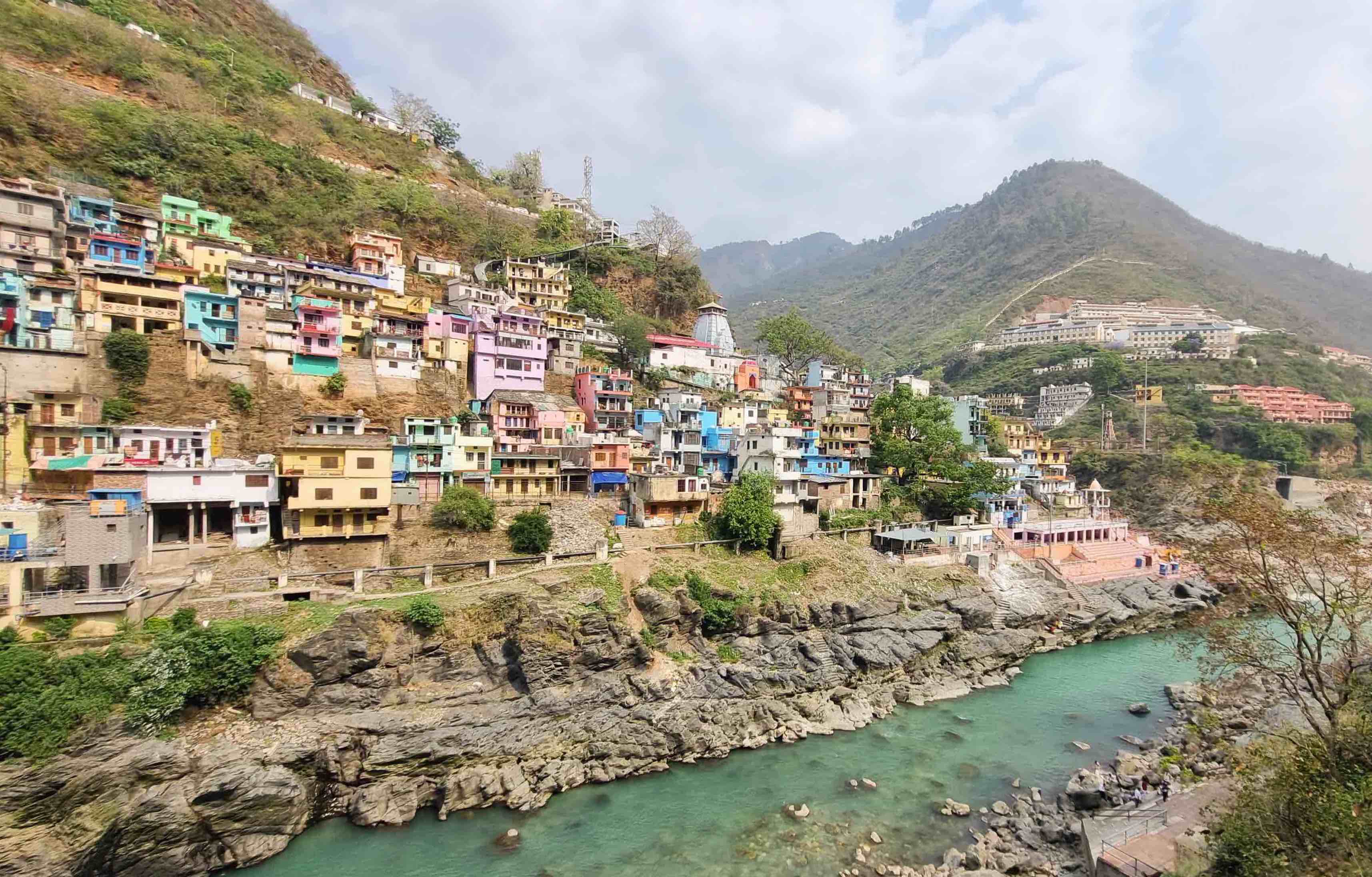
Houses, temples, and resorts dot the mountains of Devprayag.
Image: Mansee Bal Bhargava
The Journey of the Ganga
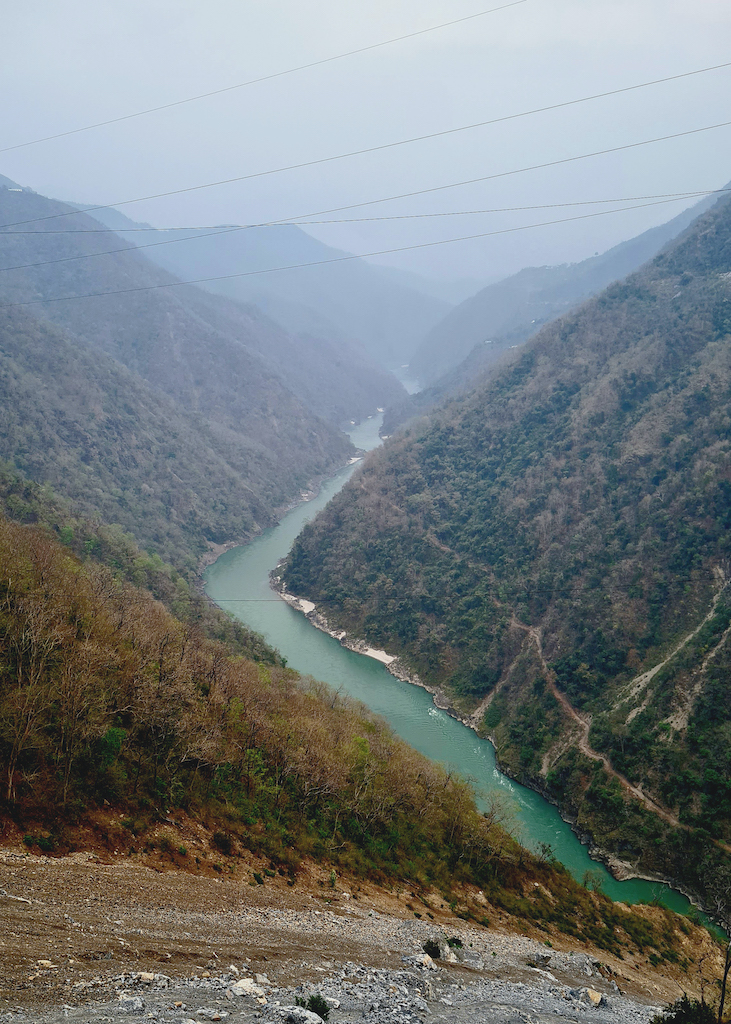
The Ganga journeying down the hills from Devprayag to Rishikesh. The river flows peacefully amidst the serene landscape, away from human interference.
Image: Monica Tewari
Rishikesh - Muni ki Reti
Downstream from Devprayag, the Ganga descends from an elevation of 2,723 ft. to 1,120ft. at Rishikesh before flowing into the Gangetic plains. Known to be the ‘place of sages’, Rishikesh is surrounded by the Shivalik mountain range on three sides and has numerous temples and ashrams along the banks of the river.
Apart from being a holy city on the banks of the Ganga, Rishikesh holds a significant place in Hindu mythology. According to the Skanda Purana, it was part of the Kedarkhand and was referred to as 'Indrakund'. The legend goes that Lord Indra, the king of deities associated with rain, once took a holy dip here to alleviate a curse. Furthermore, it is mentioned in the Ramayana that Lord Rama atoned for killing Ravana, the asura king of Lanka, at Rishikesh. The Lakshman Jhula is also said to be built at the location where Lakshman, Lord Rama’s younger brother, crossed the Ganges (Singh, 1996).
In addition to being a pilgrim center, Rishikesh is also known as the “yoga capital of the world.” The surrounding hills and the flowing river offer a picturesque landscape, attracting both tourists and spiritual seekers alike from around the world.
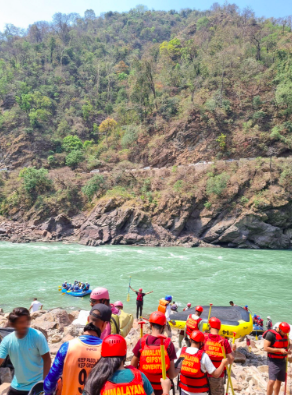
Tourists enjoying rafting in the Ganga.
Image: Mansee Bal Bhargava
Rishikesh: An Alternate Perspective
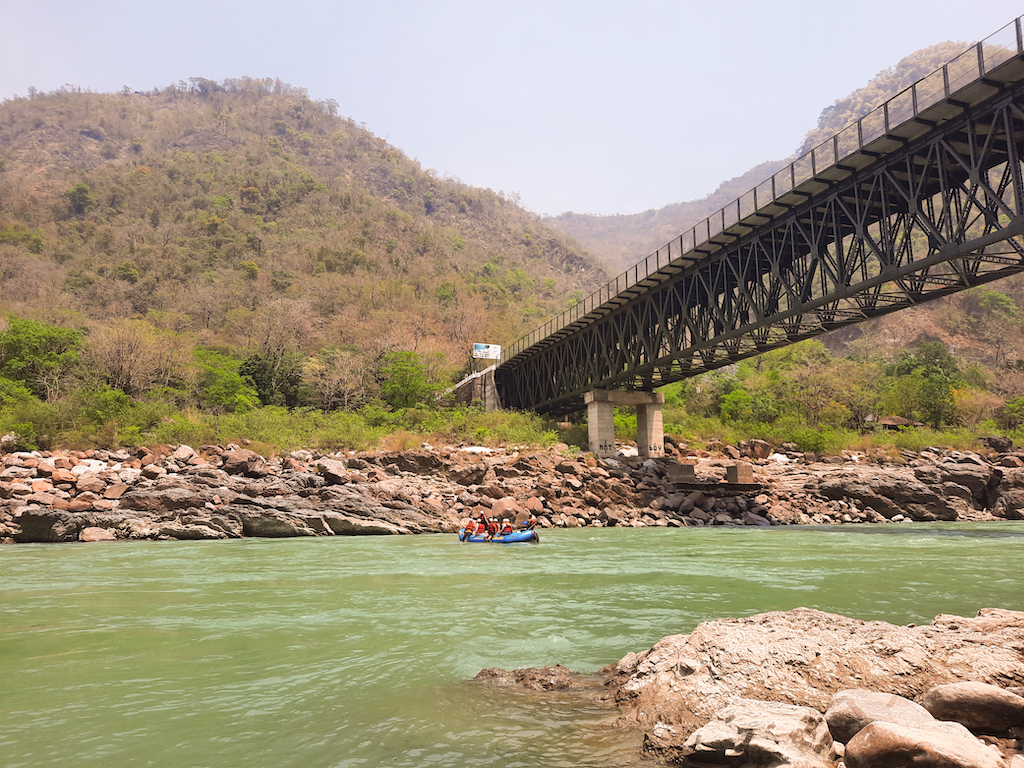
The promotion of tourism infrastructure inadvertently disconnects from people’s perceptions of the holy Ganga as a spiritual body of water.
Image: Moksha Mehta
Does the River Need Room to Flow?
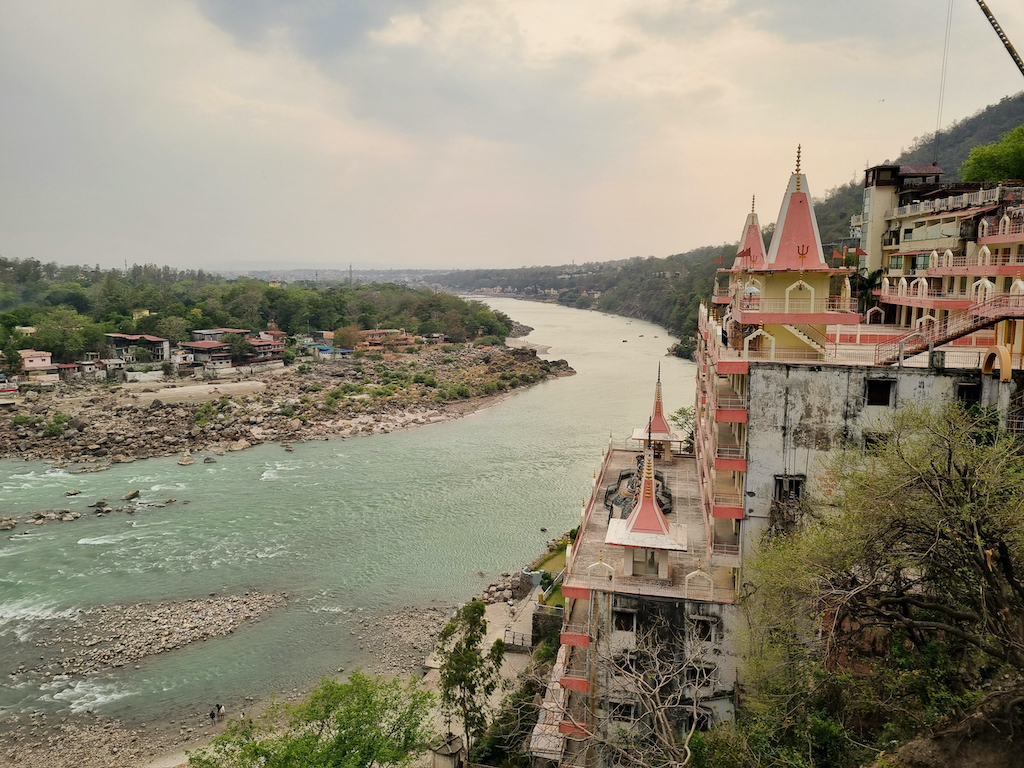
The extent of development along the river’s edge requires rethinking access to the river, it's flow, and cleanliness.
Image: Mansee Bal Bhargava
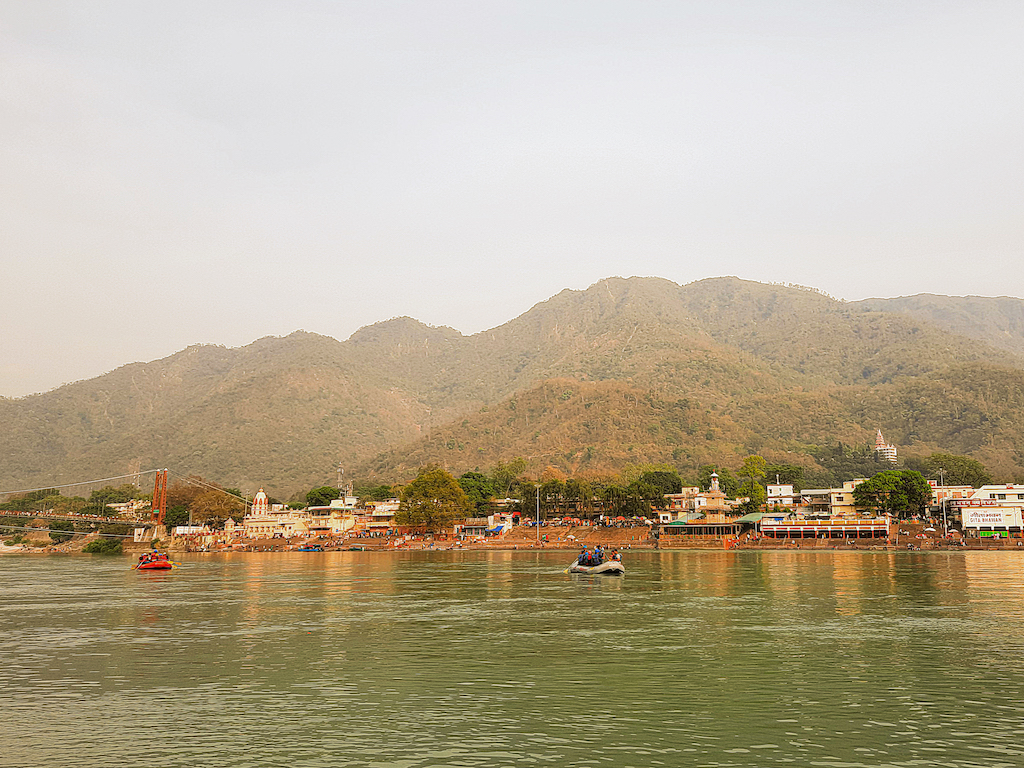
The Muni ki Reti district in Rishikesh has private and public ghats situated on both banks. These are ghats for worship as well as recreational activities. The Purnanand Ghat is a drop-off point for rafting.
Image: Moksha Mehta
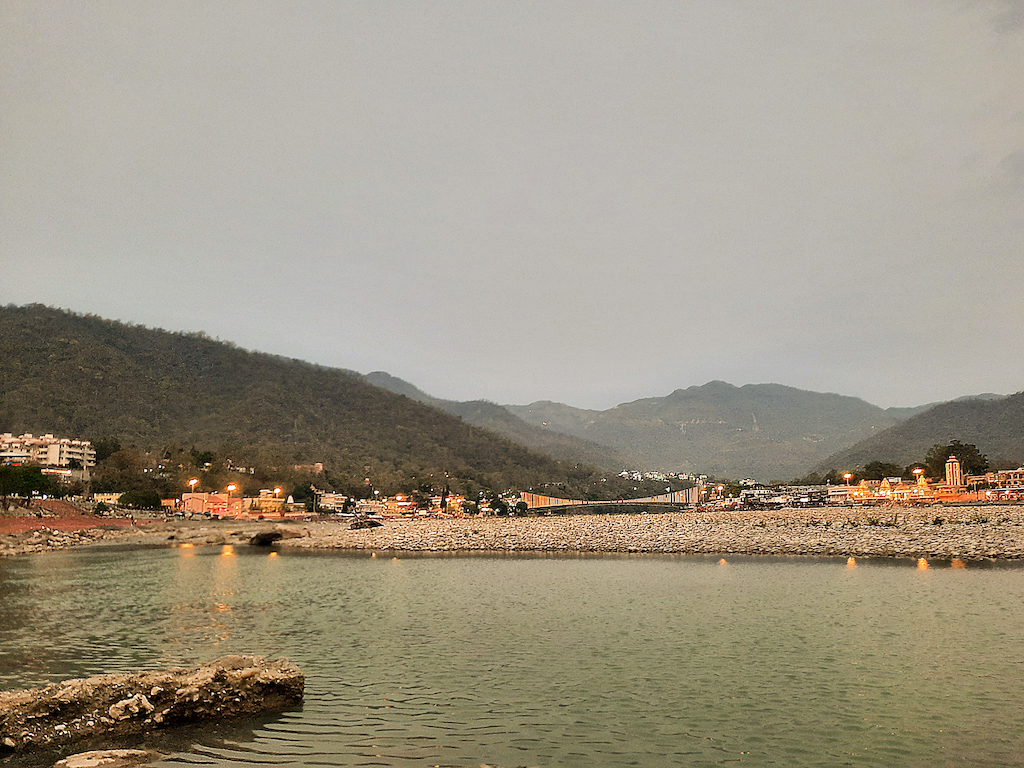
The ghats of Muni ki Reti, a place of worship during the day, transform into an illuminated built environment, providing recreational spots for attracting tourists.
Image: Moksha Mehta
Ganga Aarti
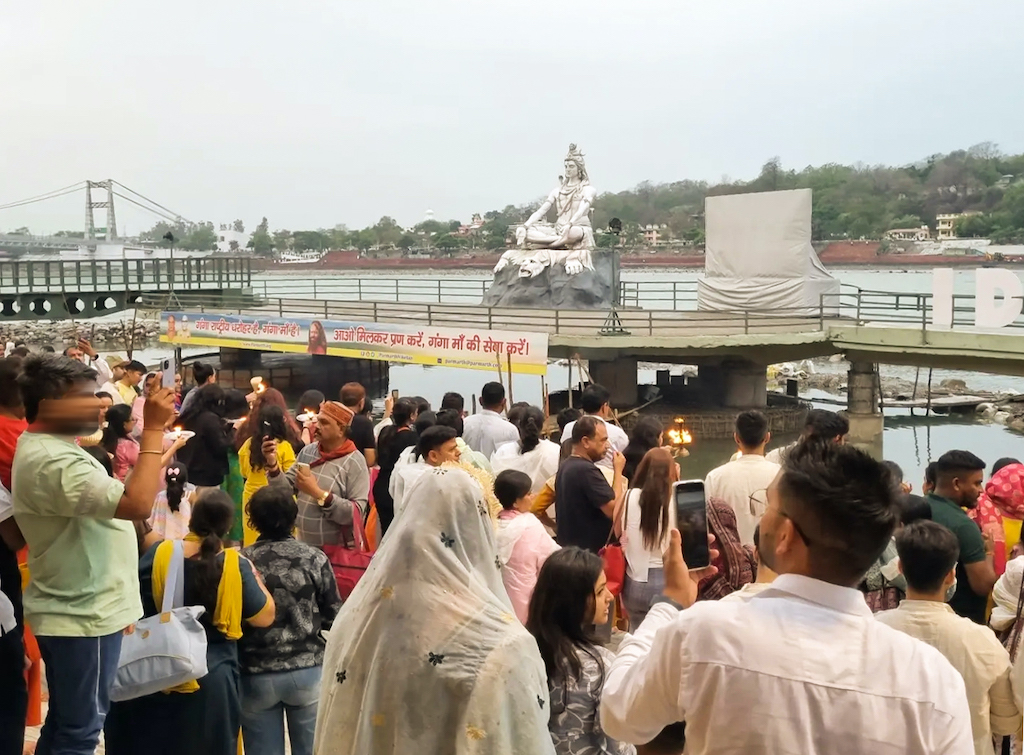
Ganga Aarti (a prayer to the Goddess Ganga) at Parmarth Niketan in Rishikesh.
Image: Mansee Bal Bhargava
The Beatles
While many sites along the Ganga are known to provide atonement, Rishikesh serves as a gateway to that enlightenment. However, it was not until the late 1960s that Rishikesh rose to prominence when the Beatles embarked on a journey to expand their spiritual horizons. In 1968, they made their way to India after receiving an invitation from Maharishi Mahesh Yogi to explore Transcendental Meditation and Indian music. Their stay in Rishikesh proved to be highly influential, inspiring the creation of around 30 songs and marking a remarkably creative phase in the band's history (Beatles Magical Tour of India | Uttarakhand Tourism, n.d.). Following their visit, numerous notable celebrities also flocked to Rishikesh and the ashram in search of spiritual enlightenment and artistic inspiration.
The 60’s Cafe
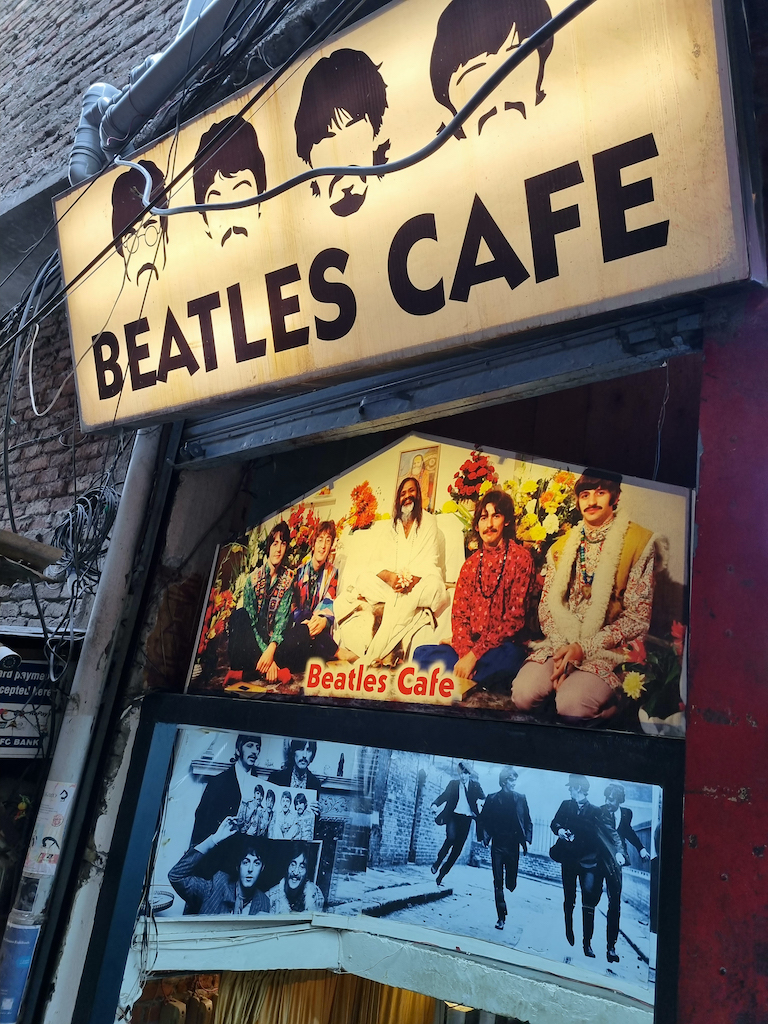
This cafe was opened as a tribute to the Beatles.
Image: Mansee Bal Bhargava
Triveni Ghat
Triveni Ghat is the main ghat in Rishikesh and it is believed that the Ganga, Yamuna, and Saraswati all flow at this location. The Ganga aarti, the scenic landscape, and the sunsets create a divine experience for tourists and pilgrims alike. After the Ganga aarti, devotees release flowers and oil-lit diyas into the river as an act of devotion.
Under the Peepal Tree
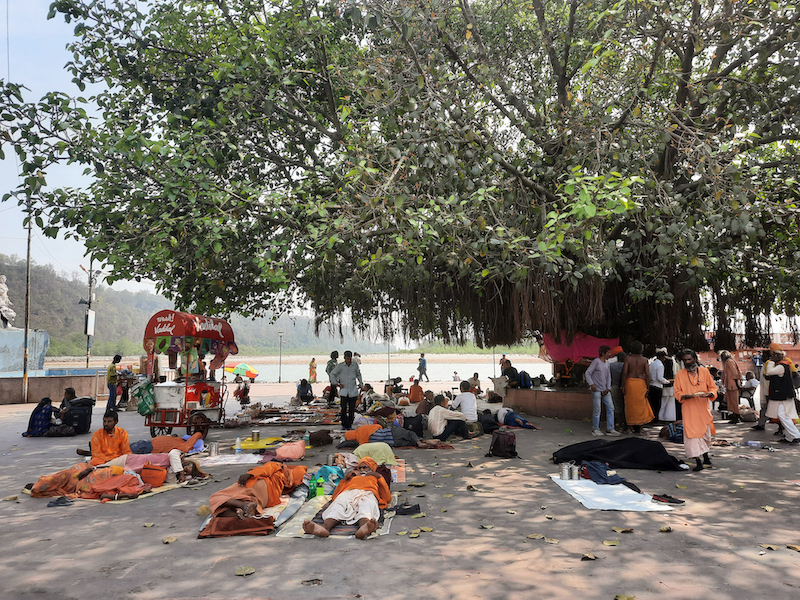
Pilgrims and tourists resting under a peepal tree at Triveni Ghat, where Annadanam (offering food) is widely practiced.
Image: Moksha Mehta
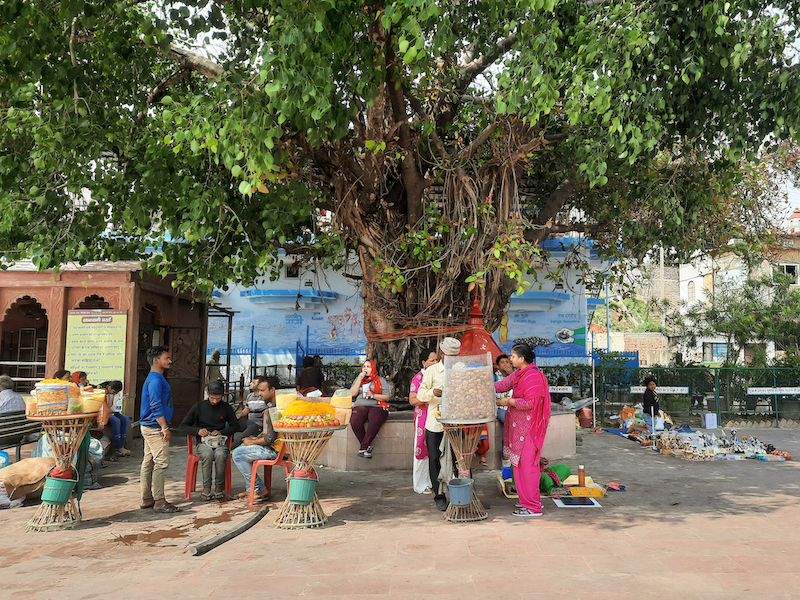
Local street food and snack vendors hawk at the Triveni Ghat.
Image: Moksha Mehta
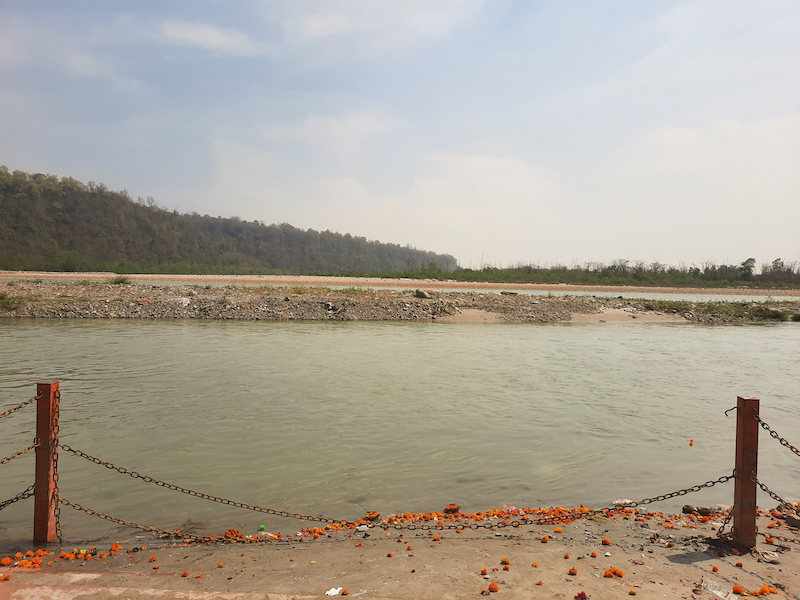
Creating access to the river to engage with it and then controlling the access to ensure safety.
Image: Moksha Mehta
Every year around 800,000 metric tonnes of flowers and waste are found in the total stretch of the Ganga, which rot in the river, releasing lead, arsenic and cadmium, as pesticides are used to grow these flowers. The flower pollution causes severe imbalance in the water ecosystem.
Is this what we leave behind?
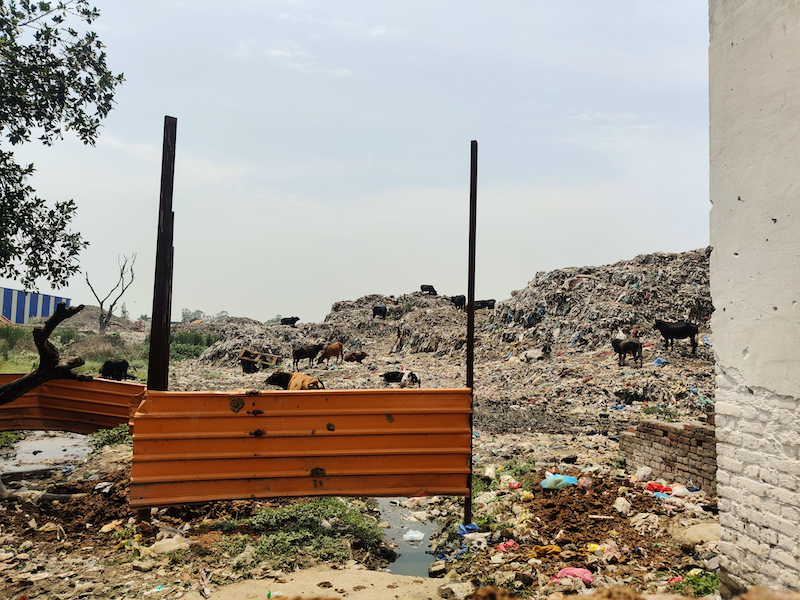
A dumping ground in the center of the city harms animals like cows and buffaloes, exposing them to plastic consumption and health risks.
Image: Anubhuti Shekar
Haridwar
The Ganga travels 250 kilometers before it reaches Haridwar. Haridwar, the gateway to Lord Vishnu and Shiva, is where the river meanders into the northern plains, earning it the moniker "Gangadwar" (Government of Uttarakhand et al., 2007).
The most significant site in Haridwar is Har-ki-Pauri, which is known for its temples, ghats, and tanks. Har ki Pauri was given its name by King Vikramaditya, who constructed the Brahmakund in the center of the ghats as a tribute to his brother Bhagirath (Government of Uttarakhand et al., 2007). It is one of India's seven sacred cities in Hindu culture, as well as one of the four locations in the country where the Kumbh Mela and Ardh Kumbh Mela are held every twelve and six years, respectively. The city also serves as a starting point for pilgrims traveling to the Chardham pilgrimage sites of Badrinath, Kedarnath, Gangotri, and Yamunotri. For Hindus, Haridwar is also an important funeral site. It is said that dying on the banks of the Ganga or immersing the ashes of a deceased person will lead to the path of the god’s adobe.
Is this the Real Ganga?
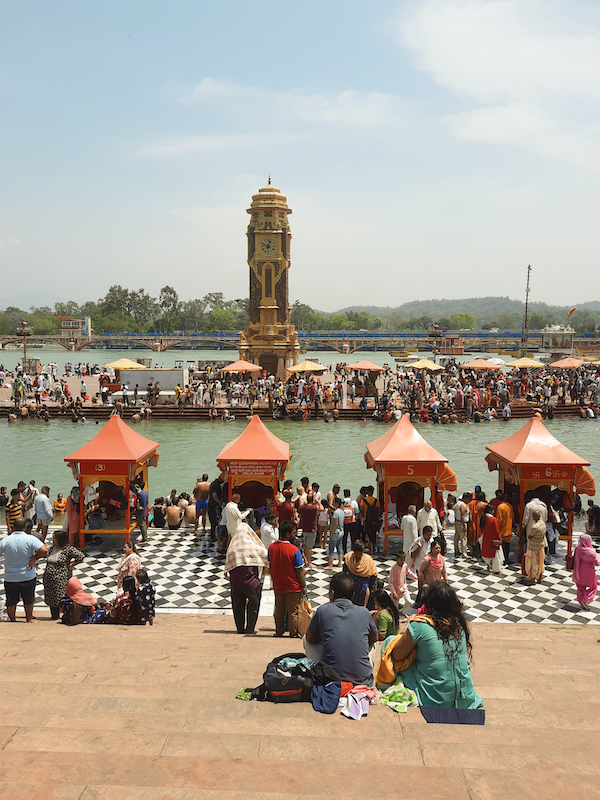
The Har ki Pauri Ghat is one of the oldest ghats in Haridwar. It was renovated and extended to an island (center) and installed with the iconic Birla tower in 1938. The ghat is situated on a canal diverted from the Ganga river which runs parallel to the said canal.
Image: Moksha Mehta
The River as a Canal
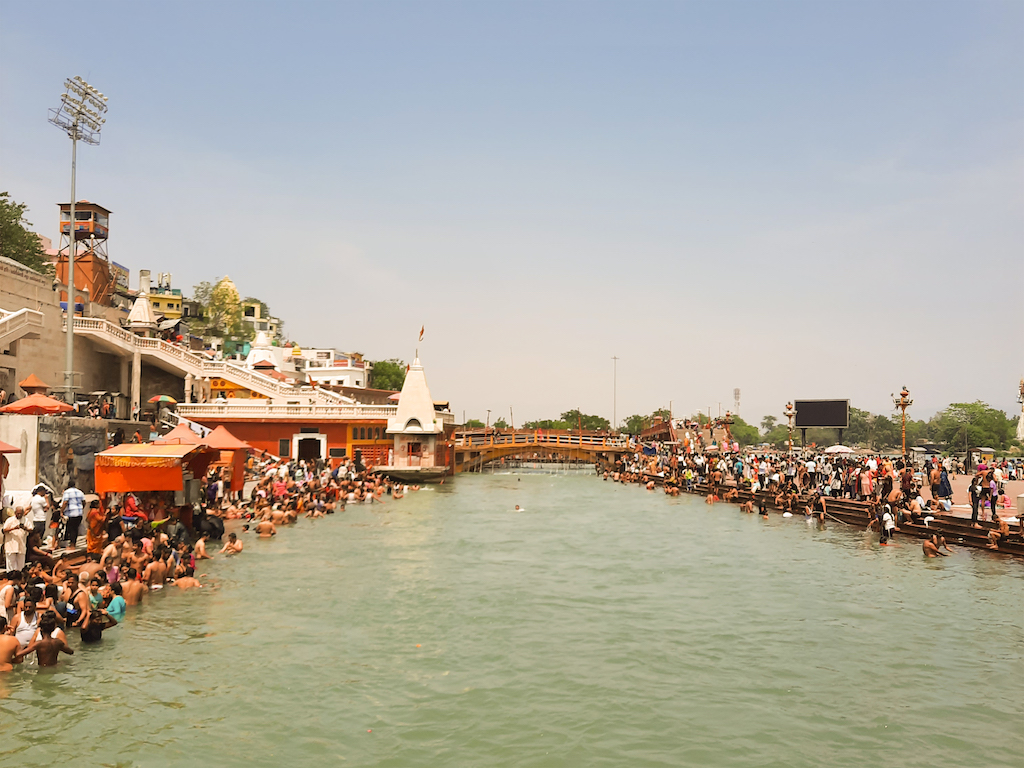
Millions of people visit Har ki Pauri Ghat in the hopes of cleansing their souls.
Image: Moksha Mehta
The Upper Ganga Canal, a remarkable hydraulic infrastructure, was conceived and executed under the British engineer Proby T. Cautley. Originating from the Bhimgoda barrage in Haridwar, this canal serves as a lifeline, catering to the water needs of 15 districts in eastern Uttar Pradesh. Initially conceived as a drought-mitigation measure, the canal has surpassed its original intent to stand as an extraordinary engineering marvel. Today, it is one of the most expansive canals in the world (Shah, 2019).
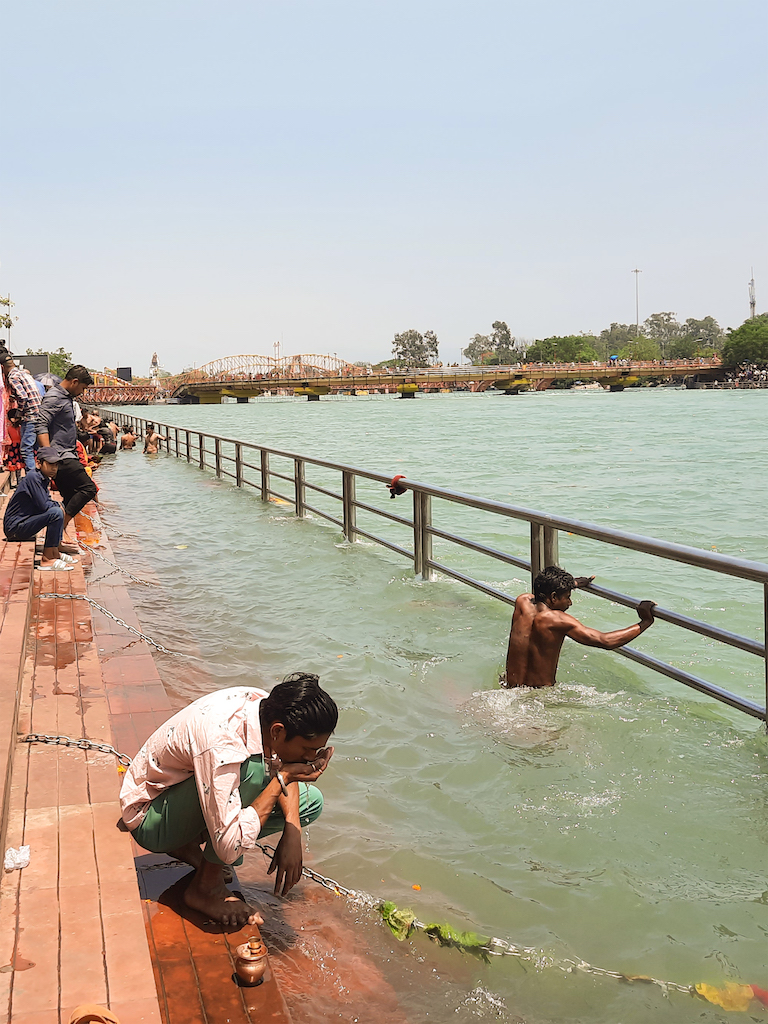
A man drinking water from the Ganga while other people are seen taking a dip.
Image: Moksha Mehta
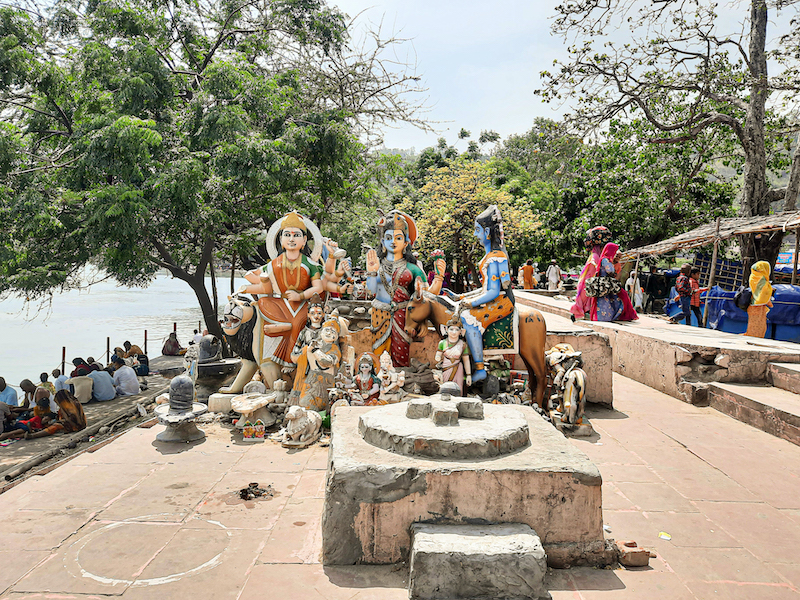
Statues of gods lie forgotten after their ceremonies, waiting to be immersed in the Ganga at the Pantdeep Ghat in Har ki Pauri.
Image: Moksha Mehta
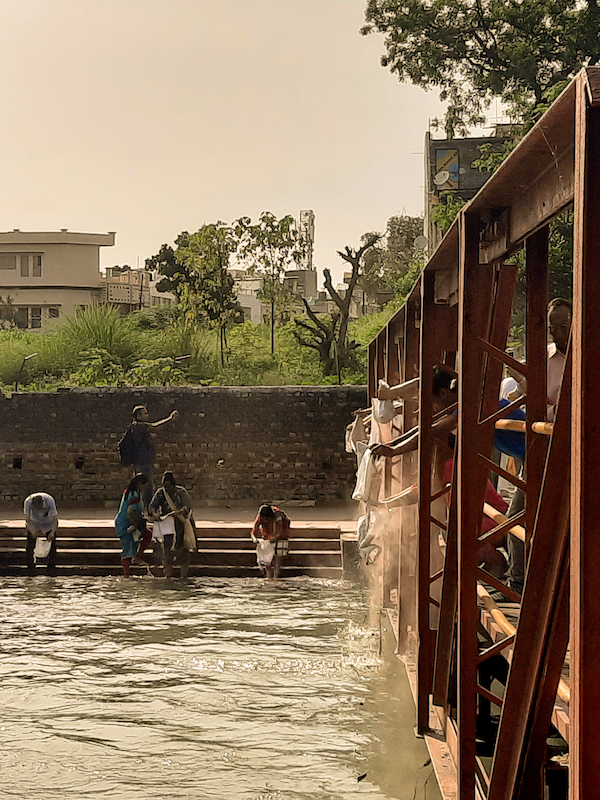
People from Karnal are immersing the ashes of unidentified bodies in the Ganga after performing the necessary Hindu rituals for these bodies on the Lodhi ghat in Kankhal, a district of Haridwar.
Image: Moksha Mehta
Surveying the Waters of the Ganga
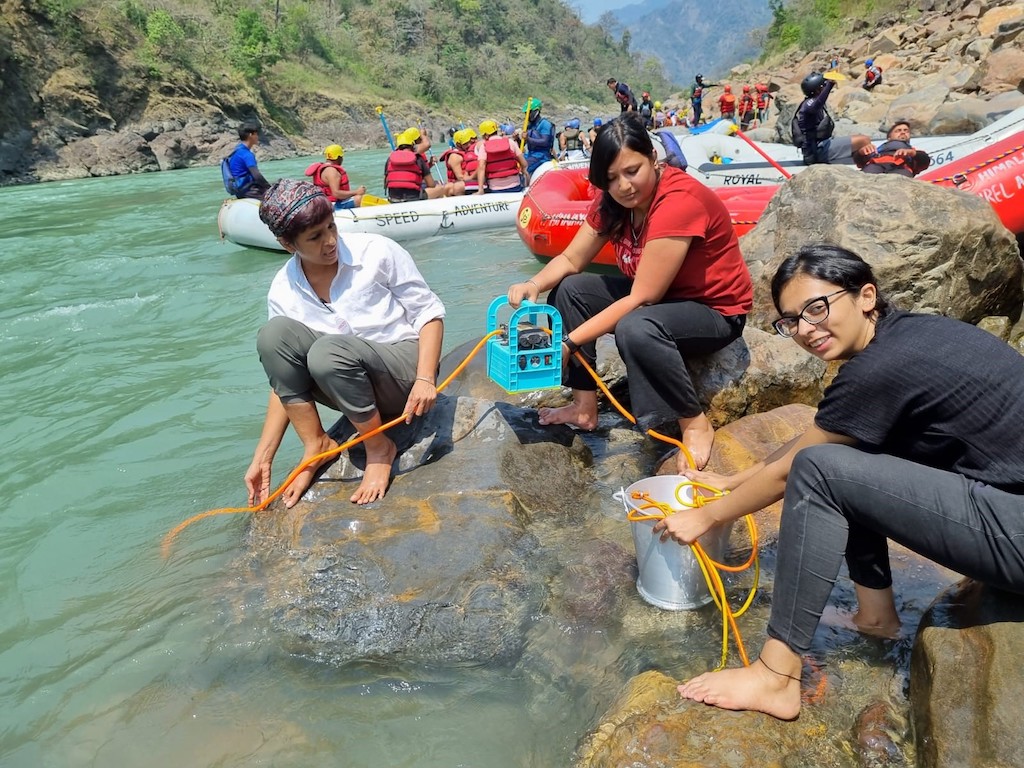
In this region, many well-established research organisations have found that several people suffer from kidney stones. This is because of the pollution and presence of high levels of magnesium and phosphorus.
Image: Shantanu Pratap Singh
A Way Forward
Today, Ganga is in its most deteriorated state, but every day, thousands of Hindus continue to worship the river to cleanse their souls of sins to attain salvation. To them, it remains in its purest form, with the ability to cleanse one's soul of sins.
However, the increased tourism to the traditional pilgrim sites has negatively impacted the health of the land and waterscapes in terms of pollution. Land and water pollution will have solutions once we realize that pollution management is people management and that pollution projects need to focus more on community awareness activities.
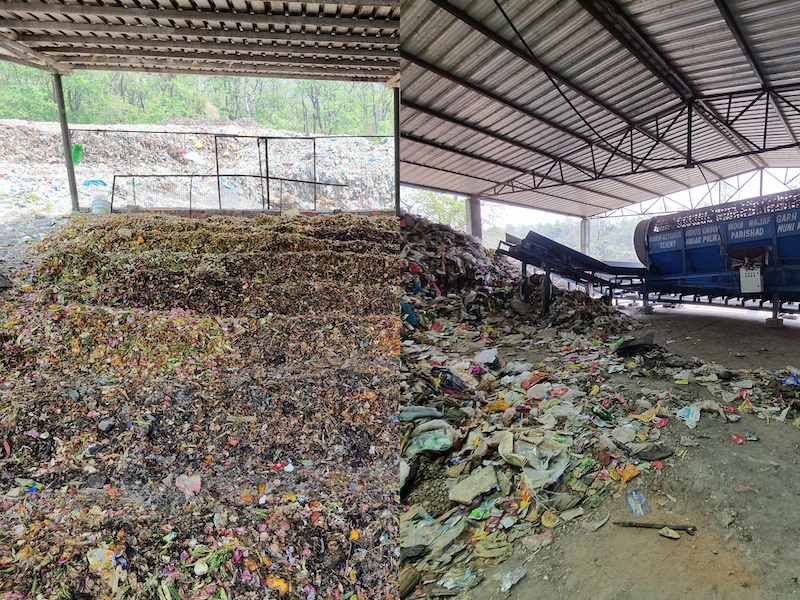
At Muni ki Reti in Rishikesh, waste collected is segregated into organic (left) and inorganic (right), both repurposed for reuse.
Image: Mansee Bal Bhargava
Authors
Moksha Mehta
Moksha recently completed her Bachelor of Architecture at CEPT University in Ahmedabad. She is an EDRC research fellow and part of an all-women research expedition on Tackling Plastic Pollution in the Ganga River. She recently presented a paper titled ‘Investigating the Relationship between Riverine landscapes and Sociocultural Practices: the Case of Sabarmati River, India’ at the 12th International Seminar on Vernacular Settlements (ISVS). This stemmed from her final thesis that focused on mapping the narrative of socio-cultural influence on river ecology change in the Sabarmati River. She is passionate about landscape ecology and urbanism, with a focus on exploring socio-cultural relationships between humans and nature.
Mansee Bal Bhargava
Mansee is an entrepreneur, researcher, educator, speaker, mentor, and a political observer. With nearly three decades of experience in the built environment, encompassing architecture design, development, planning, management, and governance of large-scale projects, she believes in sustainability and liveability. She is the Founder-Director of WforW Foundation and Research Entrepreneur at Environmental Design Consultants Ahmedabad, where she is deeply engaged in water-related issues and women's matters. She also holds the National President position at the Water Resources Council of the Women’s Indian Chamber of Commerce and Industry leading a network of professional women leaders from the water sector from across the country.
References
Basharat T, (2007, May) Hinduism and the Concept of Salvation City Development Plan: Haridwar revised. Urban Development Department Government of Uttarakhand. https://udd.uk.gov.in/files/CDP_HRD.PDF.
Kumar D, (2017) River Ganges–Historical, Cultural and Socioeconomic Attributes. Aquatic Ecosystem Health & Management, 20(1–2), 8–20. https://doi.org/10.1080/14634988.2017.1304129.
Raj S. L, (1994, January 23) Salvation According to Hinduism. Direction. https://directionjournal.org/23/1/salvation-according-to-hinduism.html.
Shah A, (2019, March 2) Ganga Canal: Offering Deliverance. PeepulTree. (115-96) https://www.peepultree.world/livehistoryindia/story/eras/ganga-canal-offering-deliverance.
Singh Rana, P.B, (1996) The Ganga River and the Spirit of Sustainability in Hinduism. (156-96); in, Swan James, Swans Roberta (eds.) Dialogues with the Living Earth. New Ideas from Spirit of Place from Designers, Architects and Innovators. Quest Books, Theosophical Publ. House, Wheaton, IL, USA: 86-107.
Uttarakhand Tourism. Beatles Magical Tour of india: Uttarakhand tourism. Beatles magical tour of India. (n.d.) https://uttarakhandtourism.gov.in/blog/beatles-magical-tour-india.